
Heat Illness in Young Athletes: What Every Parent Should Know

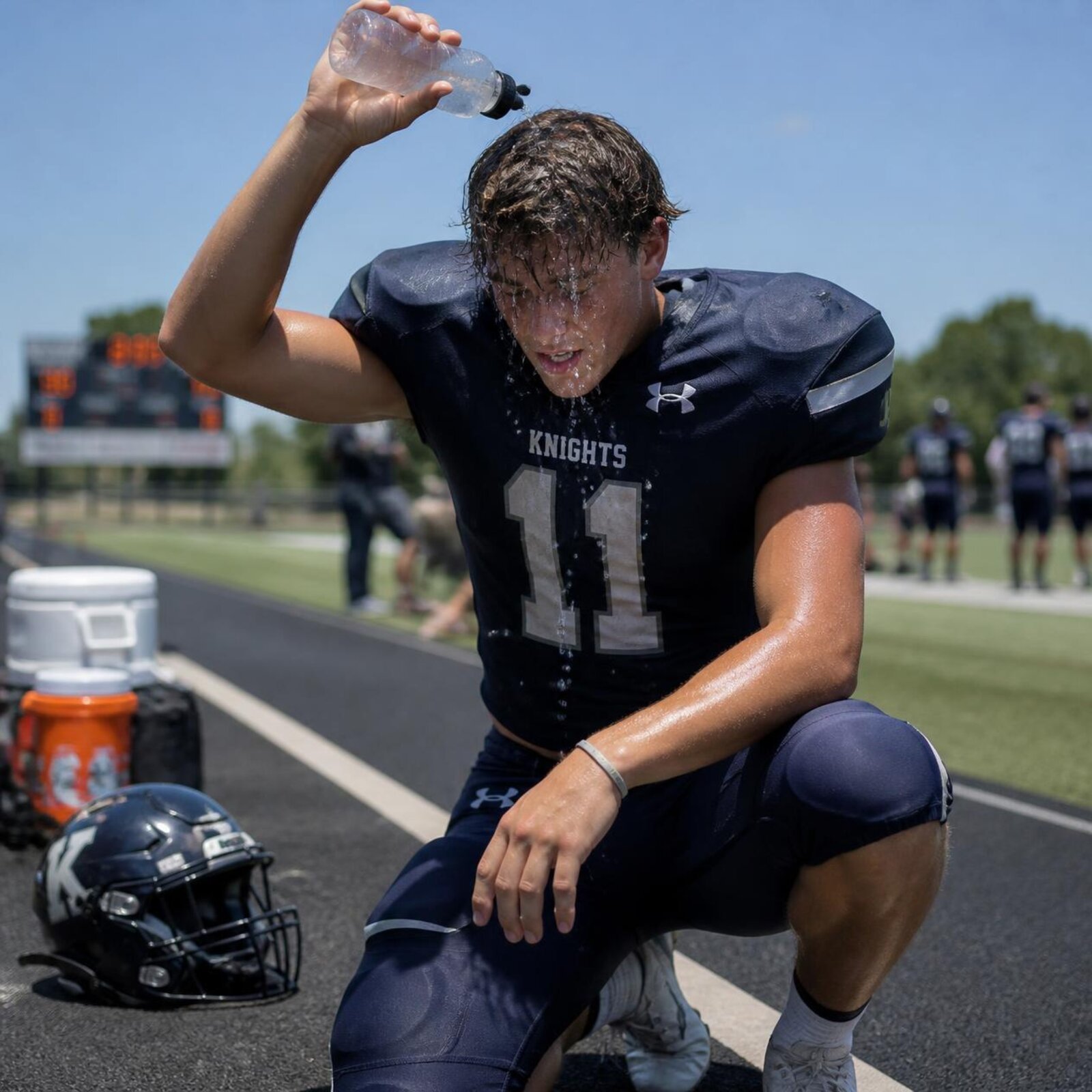
It's 4:00 on an August afternoon, the turf is easily 140 degrees, and forty teenagers in full pads are running gassers because two-a-days start this week. Somewhere on that field is a kid who feels a little dizzy, a little queasy, and doesn't say a word about it — because who wants to look weak in front of the new coach?
That kid is why I'm writing this.
I've been the team physician at Del Norte High School for 15 years, and heat illness is one of the most common — and most preventable — things I deal with every August. It's not that coaches don't care. It's that heat illness sneaks up fast, the early signs just look like "being tired," and by the time it's obviously a problem, it already is one.
Why Kids Overheat Faster Than You'd Think
Here's something a lot of parents don't know: kids and teens are actually at higher risk for heat illness than adults. They generate more heat relative to their body size when they exercise, and they don't sweat as efficiently — so their built-in cooling system just isn't as good yet. Now stack full pads trapping heat against the skin, three-a-day schedules in the hottest weeks of the year, and every teenager's instinct to push through discomfort instead of saying something, and you've got a recipe that sends kids to the ER every summer.
The early symptoms — fatigue, headache, a little nausea, just feeling "off" — are so easy to write off as being out of shape. That's exactly why heat illness usually gets caught late instead of early.
Heat Cramps, Heat Exhaustion, Heat Stroke: Know the Difference
Heat illness isn't one thing — it's a spectrum. And where your kid falls on it changes what you do next.
Heat cramps are the mildest version: painful muscle spasms, usually in the calves, hamstrings, or stomach, from losing fluid and electrolytes. Annoying, but it responds to rest, fluids, and stretching.
Heat exhaustion is a bigger deal — heavy sweating, weakness, dizziness, headache, nausea, skin that's cool and clammy, a pulse that's fast but weak. The kid's still alert and still sweating. Get them into the shade, get fluids in them, cool them down — and if they're not better in 30 minutes, get medical help.
Heat stroke is the real emergency. Core temp climbs above 104°F and the body's cooling system basically shuts off. Look for confusion, slurred speech, stumbling, seizures, or skin that's hot but has stopped sweating. Call 911, every time, no exceptions. Heat stroke can be fatal within minutes if the body isn't cooled fast — ice water immersion is the go-to while you wait for EMS.
The biggest mistake I see? Treating heat exhaustion like it's just "toughness" instead of what it really is: a warning that something worse is right around the corner.
What Actually Works to Prevent It
The good news — heat illness is mostly preventable, and it doesn't take anything fancy. Just a few habits that get skipped when everyone's focused on the season opener.
Hydrate before practice, not during it. By the time your kid feels thirsty, they're already behind. Drinking consistently the day before and morning of practice matters way more than chugging a bottle at the water break.
Respect the acclimatization window. Bodies need about 10–14 days of gradually increasing heat and workload before they're ready for full-intensity practice in the heat. Jumping straight into full-pad two-a-days in week one is when I see the most injuries, hands down.
Go by the heat index, not just the temperature. Humidity matters just as much as heat — a 90-degree day with high humidity can actually be worse than a dry 95-degree day, because sweat can't evaporate to cool the body.
Take the equipment off during breaks. Helmets and pads off at water breaks lets heat actually escape instead of cooking under the gear.
Watch out for each other. Heat stroke can mess with judgment before the athlete even realizes something's wrong. Teammates and coaches catching the early signs — stumbling, confusion, going quiet — are often what makes the difference.
Who Needs to Be Extra Careful
Everyone should take heat seriously, but a few groups carry more risk: kids new to the team or a warmer climate, anyone getting over a recent illness, athletes on certain meds (some ADHD meds and antihistamines included), and linemen or anyone carrying extra body mass under pads. If your kid fits one of these, it's worth a quick chat with their coach or trainer before the season heats up — literally.
"He's Just Out of Shape" — A Myth I'd Love to Retire
I hear this all the time from well-meaning parents and coaches: a kid looks sluggish or nauseated at practice, and everyone chalks it up to poor conditioning. Sometimes that's true. But conditioning issues build slowly over a practice or a season — heat illness can go from fine to serious in 20 minutes. If your kid goes from okay to dizzy, confused, or vomiting fast, especially in hot weather, treat it like heat illness first and ask questions later. Being cautious costs you nothing. Not being cautious can cost everything.
The Bottom Line
Heat illness is one of the few sports medicine emergencies that's almost entirely preventable with the right habits. The goal isn't to scare anyone off summer sports. It's to make sure your kid's toughness never gets mistaken for a medical emergency.
Got questions about your athlete's specific situation, meds, or practice schedule? Reach out — I'd much rather answer a question now than treat an emergency later.
← Back to all posts